
Metabolic health refers to how effectively the body regulates and uses energy, maintains blood glucose and lipid levels, and supports normal physiological functions. Metabolism involves a complex network of biochemical processes that convert nutrients into energy and essential building blocks. Proteins and amino acids play important roles in these processes, supporting tissue maintenance, enzyme production, and nitrogen balance. Understanding metabolic health can help individuals make informed decisions about nutrition, physical activity, and long-term well-being.
Understanding Metabolism
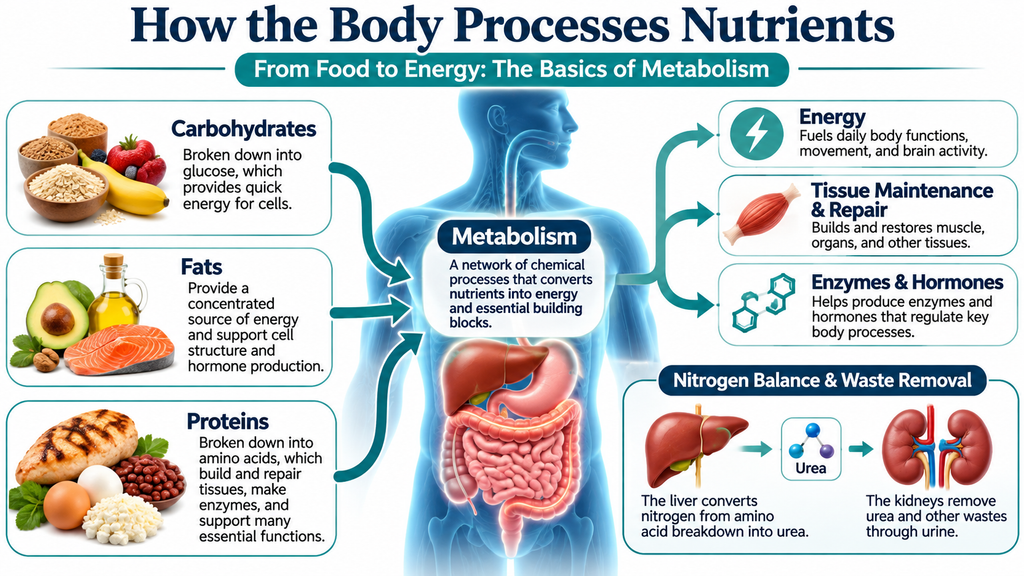
Metabolism includes all the chemical reactions that allow the body to function, grow, repair tissues, and maintain energy balance. Carbohydrates are broken down into simple sugars, including glucose, which cells can use for energy. Fats provide a concentrated source of energy and help support cell structure and hormone production. Proteins are broken down into amino acids, which the body uses to build and repair tissues, produce enzymes, and perform many essential functions. When amino acids are broken down for energy or other purposes, nitrogen-containing waste is produced. The liver converts much of this nitrogen into urea, which the kidneys then remove through urine. These interconnected processes help maintain normal metabolic function.
Key Indicators of Metabolic Health
Metabolic health is commonly assessed using several clinical measurements that help evaluate how effectively the body regulates blood sugar, blood fats, and cardiovascular function. Important indicators include fasting blood glucose or hemoglobin A1c (HbA1c), blood pressure, triglyceride levels, HDL cholesterol, and waist circumference. These measurements can help healthcare professionals identify risk factors associated with insulin resistance, type 2 diabetes, cardiovascular disease, and metabolic syndrome. No single measurement provides a complete picture of metabolic health. Results should be interpreted together with an individual’s medical history, medications, and other relevant health factors.
Blood Glucose & HbA1c
Blood glucose measures the amount of sugar circulating in the bloodstream at a specific time. Fasting blood glucose is commonly used to help screen for diabetes and prediabetes. Hemoglobin A1c (HbA1c) reflects average blood glucose levels over approximately the previous two to three months. These tests help healthcare professionals evaluate blood sugar regulation and identify potential metabolic concerns. Results should be interpreted in the context of an individual’s health history, since certain medical conditions can affect test accuracy.
Blood Pressure
Blood pressure measures the force of circulating blood against the walls of the arteries. It is recorded using two numbers: systolic pressure, which measures pressure when the heart beats, and diastolic pressure, which measures pressure when the heart relaxes between beats. Persistently elevated blood pressure can increase the risk of heart disease, stroke, and kidney disease. Healthcare professionals evaluate blood pressure using repeated measurements and consider factors such as age, medical history, and existing health conditions.
Triglycerides
Triglycerides are a type of fat found in the bloodstream. The body converts excess calories into triglycerides, which are stored in fat cells and used for energy when needed. Elevated triglyceride levels can be associated with insulin resistance, metabolic syndrome, and increased cardiovascular risk. Very high triglyceride levels can also increase the risk of acute pancreatitis. Triglycerides are typically measured through a blood test called a lipid panel, and results should be evaluated alongside other cardiovascular and metabolic risk factors.
HDL Cholesterol
High-density lipoprotein (HDL) is often called “good cholesterol” because it helps transport excess cholesterol from tissues back to the liver for processing and removal. HDL cholesterol is measured as part of a lipid panel and is one of several indicators used to assess cardiovascular and metabolic health. Low HDL cholesterol levels are associated with an increased risk of cardiovascular disease and may occur alongside insulin resistance and metabolic syndrome. However, raising HDL cholesterol levels alone does not necessarily reduce cardiovascular risk. Healthcare professionals evaluate HDL alongside LDL cholesterol, triglycerides, and other individual risk factors.
Waist Circumference
Waist circumference is a measurement used to estimate abdominal fat, which can be associated with increased metabolic and cardiovascular risk. Excess fat stored around internal organs, known as visceral fat, is linked to insulin resistance, type 2 diabetes, and cardiovascular disease. Healthcare professionals may use waist circumference alongside blood glucose, blood pressure, cholesterol, and triglyceride measurements to assess metabolic health. Waist circumference thresholds vary according to factors such as sex and population background, so results should be interpreted in the context of an individual’s overall health.
Medical Disclaimer
The information provided on ProteinToxic.com is intended for general educational and informational purposes only. It is not a substitute for professional medical advice, diagnosis, or treatment. Always consult a qualified healthcare professional regarding medical conditions, laboratory results, dietary changes, or treatment decisions. Never disregard professional medical advice or delay seeking care because of information found on this website. If you are experiencing a medical emergency, contact emergency services immediately.
Medical References & Further Reading
National Institute of Diabetes and Digestive and Kidney Diseases (NIDDK). The A1C Test & Diabetes.
https://www.niddk.nih.gov/health-information/diagnostic-tests/a1c-test
American Heart Association (AHA). Understanding Blood Pressure Readings.
https://www.heart.org/en/health-topics/high-blood-pressure/understanding-blood-pressure-readings
National Heart, Lung, and Blood Institute (NHLBI). Blood Cholesterol.
https://www.nhlbi.nih.gov/health/blood-cholesterol
National Heart, Lung, and Blood Institute (NHLBI). Metabolic Syndrome.
https://www.nhlbi.nih.gov/health/metabolic-syndrome